Following Lorna Doone in Exmoor: A Literary Heritage Trail
A practical guide to the Exmoor places behind R. D. Blackmore's Lorna Doone, from Badgworthy Water to Oare...


Somerset is a county of small parishes and stubbornly local families. A line can sit within five miles of the same church tower for two hundred years: a butcher at Castle Cary, a thatcher at Curry Rivel, yeomen under the Mendips. That is good news for anyone building a family tree here, because two record sets do most of the heavy lifting. Church of England parish registers, running in many parishes from the sixteenth century into the twentieth, supply names, dates and relationships. Tithe maps and their apportionments, drawn up in the 1840s, supply a place on the ground.
The registers might tell you that John Stuckey married Hannah Board in a particular church in 1798. The tithe apportionment tells you that a John Stuckey occupied a cottage, a garden and two orchards in the same parish forty years later, and that a Hannah Stuckey held the cottage next door. Together they turn a name into a household. In a county where the same four or five surnames repeat in every parish, that is worth more than any index.
Resist starting in the 1600s. Begin with people you can name, use twentieth-century records to reach one specific parish, then work back. Census returns from 1841 and civil birth, marriage and death certificates from 1837 give you dates, but a registration district can cover a dozen parishes. The parish is what matters, because that is how registers were kept. Once you know your ancestor came from Wiveliscombe or Wedmore, you have a set of registers to search and a tithe map to read, and the two will stop you grafting your family onto the wrong household.
Before 1837 the parish register is the main record of ordinary lives. Entries are short, and what they contain changes over time.
A baptism entry gives the date of baptism, not of birth, and names the child and the father; the mother appears more often from the eighteenth century, and printed registers from 1813 add the family's abode and the father's occupation. A marriage entry names both parties, their parishes and whether they married by banns or licence. After 1754, when Lord Hardwicke's Act standardised the forms, it also names witnesses, who are often relatives worth chasing. A burial entry gives a name and, from 1813, an age and an abode. That age is one of the most useful facts in the whole record set, because it lets you estimate a birth year and test it against the baptisms.
The first is the calendar. Until 1752 the year began on 25 March, so an entry dated February 1700 belongs, by modern reckoning, to 1701; registers often write it as 1699/1700. The second is the gap. Many Somerset registers fall silent during the 1640s and 1650s. Bishop's transcripts, the copies sent to the diocese each year, sometimes fill a hole in the register, and occasionally contradict it, since incumbents copied them in a hurry.
Most original parish registers for the county are held by the Somerset Heritage Centre at Taunton, which also serves as the record office for the diocese of Bath and Wells. The practical routes are:
The Tithe Commutation Act of 1836 replaced payments in kind with a money rentcharge, and to work out who owed what, each parish was surveyed. The result is a pair of documents: a large map with every field, cottage and farm numbered, and an apportionment schedule listing, for each number, the landowner, the occupier, the name and description of the holding, its state of cultivation, its acreage and the rentcharge. For most Somerset parishes the apportionment dates from the late 1830s or 1840s, which places it between the parish registers and the 1841 census.
Read it as a snapshot of a village. Find your surname among the occupiers, note the plot numbers, then turn to the map and see what those people actually held: a cottage and an orchard, a tenement on the green, sixty acres of pasture. The official set is at The National Archives; copies for many parishes are at the Heritage Centre, and a growing number have been digitised, so ask what exists for your parish before planning a trip.
One limit to keep in mind: tithe records land, not people. A labourer who rented nothing appears nowhere, and wives and children are invisible. If your ancestor was landless, as most were, the map confirms the neighbourhood rather than the household.
The aim is not to collect every document. It is to make sure the John Stuckey in the register is the John Stuckey in the orchard.
Work one parish at a time and keep a log: parish, record, dates searched, reference, result. Cite references in full, so a note reading "Somerset Heritage Centre, D/P/…" is worth more than a photocopy you cannot place.
At the archive, take a pencil rather than a pen, and check photography rules before you travel. Order documents in advance, keep a running list of surname variants, and expect spelling to wander from page to page.
Accept, too, that some questions will stay open. Registers burn, flood and go missing; a gap in the 1640s is not a failure on your part. Write down what you know, what you suspect and what would prove it, and the next visit starts from solid ground.
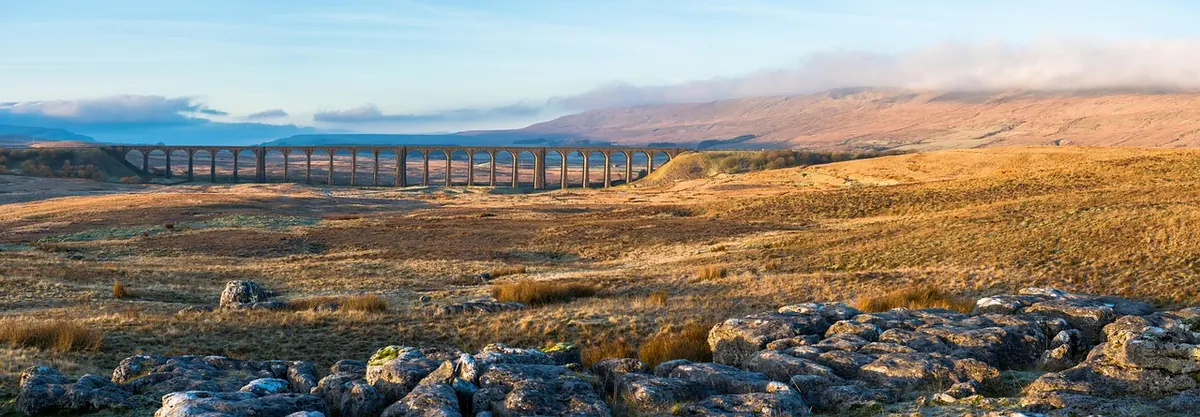
Photo: Felix-Mittermeier / Pixabay
A practical guide to the Exmoor places behind R. D. Blackmore's Lorna Doone, from Badgworthy Water to Oare...
A three-hour plan for Wells Cathedral's highlights, from the west front to the chapter house, plus...
A step-by-step walking route through Dunster's castle, Yarn Market, watermill and old streets, with the...