Following Lorna Doone in Exmoor: A Literary Heritage Trail
A practical guide to the Exmoor places behind R. D. Blackmore's Lorna Doone, from Badgworthy Water to Oare...

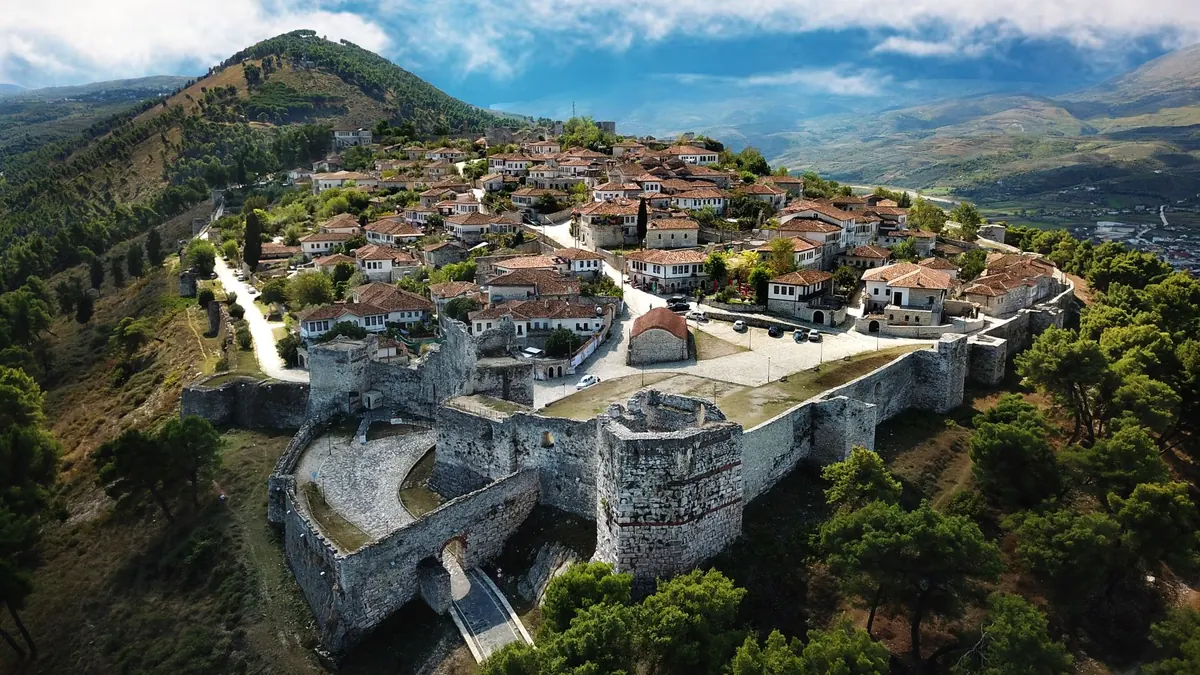
Dunster keeps its shape. The castle sits on its wooded hill, the streets below still follow their medieval burgage plots, and the Yarn Market stands in the middle of the road where cloth was once sold. It is often described as one of the most complete medieval villages in England, and the reason is simple: the Luttrell family held the estate for centuries and built carefully rather than rebuilding wholesale.
This walk takes in the castle, the market place, the watermill, the church and the old lanes. Give it half a day at an easy pace. Add longer if you want to linger in the castle gardens or climb the folly tower on Conygar Hill.
Begin where the village has always done business. The Yarn Market is an octagonal timber building, traditionally dated to 1609, raised when Dunster's wool and cloth trade still mattered. Its roof lantern let light down onto the stalls, and the deep eaves gave merchants somewhere to spread cloth out of the rain. Walk a slow circle around it and look at the massive corner posts and the carved beams above your head.
From here, the High Street runs uphill towards the castle. This is the best stretch in the village for reading the buildings: jettied upper floors leaning over the pavement, old shopfronts, stone doorways with worn steps. Notice how narrow the plots are. Each one marks a medieval burgage holding, and many have not been merged in 600 years.
On your left, partway up, is the Luttrell Arms. Parts of it date to the 15th century, and it is reputed to have served as lodging for guests of the Abbots of Cleeve before the Luttrells made it their own. It remains a good place to end the walk.
Follow the signs for the castle. The drive climbs through trees and is steeper than it looks from the village, but it is short. Take it slowly and turn round occasionally: the roofs of Dunster stack up below you, and beyond them the Bristol Channel opens out.
Dunster began as a motte-and-bailey castle after the Norman Conquest. It was held for the crown, then granted to the Luttrells in the 14th century, and it stayed in that family until the 1970s, when it passed to the National Trust. After the Civil War its defences were partly demolished, which is why the gatehouse and the later house sit together so comfortably rather than looking like one continuous fortress.
The house you walk through is largely a Victorian remodelling of a medieval building, carried out for the Luttrells in the 19th century. Expect carved oak, leather hangings, a staircase built to impress, and rooms that are comfortable rather than grand. From the upper windows you can pick out Minehead, the Quantocks and, on a clear day, the Welsh coast.
The gardens repay an unhurried hour. There are terraces cut into the hillside, a Victorian conservatory filled with ferns, and a riverside walk along the River Avill where the shade is welcome in summer. Look for the dovecote, with hundreds of nesting holes built into its walls, and for the bats that roost in parts of the castle. Some rooms are occasionally closed for conservation, so check the noticeboard at the entrance and plan around it.
Leave the castle grounds on the mill side and drop down to the watermill. When it is running, the wheel turns and the stones grind flour, and you can watch the whole process from the doorway. It is one of the few working mills in the West Country that visitors can walk through, and it makes a good halfway stop.
From the mill, follow the lane and footpath down to Gallox Bridge, a medieval packhorse bridge over the Avill. It is narrow, humped and low-walled, built for animals rather than carts. Stand on it and think about what crossed here: wool going out, grain and salt coming in, and packhorses picking their way along a route that predates the turnpikes.
Walk back up into the village and make for St George's Church. The tower is a landmark from every direction. Inside, look for the carved rood screen and the Luttrell tombs and memorials, which trace the family across generations. The churchyard is peaceful, and the yew trees have clearly been there a while.
Church Street itself is the place to slow down. The building known as the Nunnery, the old priory remains, the almshouses founded by the Luttrells, and a scatter of cottages with stone mullions and tiny windows all sit within a couple of hundred yards. West Street, climbing away towards the Exmoor road, is the steepest and most photogenic of the lanes, with cobbles underfoot and stone walls that hold the day's heat.
If your legs are still willing, take the footpath from the village up Conygar Hill to Conygar Tower. It is a late 18th-century folly, built as an eye-catcher for the estate, and it does its job: from the village it frames the hill, and from the hill it gives you the whole layout at once — castle, church tower, market place and the streets threading between them.
The climb takes twenty to thirty minutes at a steady pace and is steep in places. Wear something with grip if the ground is wet. There is no need to rush; the view is the reward, and the descent is quicker than you expect.
The village circuit is roughly a mile and a half; add the castle grounds and you are closer to three and a half. Allow two and a half to four hours with stops. The castle drive, West Street and the path to Conygar Tower are all steep, and the cobbles are uneven, so sturdy shoes make a real difference.
Parking in the village is limited and fills early in summer; the main car park is on Dunster Steep, with a National Trust car park closer to the castle. Check opening times for the castle and mill before you travel, as they vary by season and by day. Dunster station, on the West Somerset Railway, is about a mile from the market place, so a steam train ride can bookend the walk neatly. In early December the village holds its candlelit evening, which is lovely and extremely busy — book food and accommodation well ahead if you plan to come then. Dogs are welcome on much of the route but not everywhere indoors, so check signs as you go.
Photo: Klidjon Gozhina / Pexels
A practical guide to the Exmoor places behind R. D. Blackmore's Lorna Doone, from Badgworthy Water to Oare...
A three-hour plan for Wells Cathedral's highlights, from the west front to the chapter house, plus...
A warm, practical introduction to Somerset cider: how orchards shaped the county, how the press and the...