Following Lorna Doone in Exmoor: A Literary Heritage Trail
A practical guide to the Exmoor places behind R. D. Blackmore's Lorna Doone, from Badgworthy Water to Oare...

Ask someone in Somerset what this county does best and you may hear about cheese, or willow, or the peculiar flat light over the Levels. Give them another minute and cider will arrive. It is not just a drink here. It is a set of dates, a set of buildings, a vocabulary — scrumpy, wassail, flagon, keeving — that makes perfect sense in a village hall and almost none anywhere else. The encouraging news for a newcomer is that the tradition is unusually open: farm cider has always been made to be shared, sold from a door, and argued about in good humour. What follows is how the year runs, what happens at the press, and how to be a welcome guest rather than a curious nuisance.
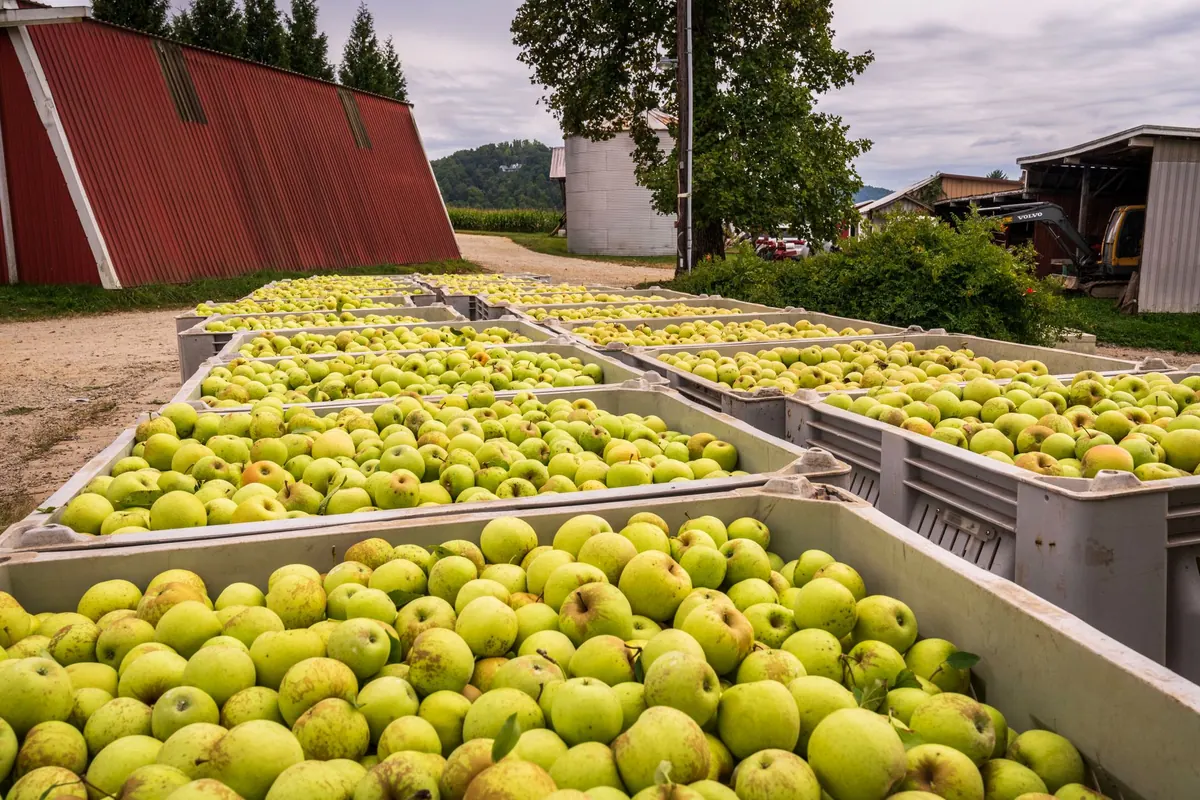
Somerset has grown cider apples for centuries, and the landscape still shows it. Traditional orchards are not the neat rows of a modern top-fruit farm but loose groups of standard trees in grass, often grazed by sheep or geese, often bounded by a hedge and a ditch. You will find them on the slopes of the Mendips, across the Taunton Vale, and in the lanes around Wedmore, Baltonsborough, Ilminster and Shepton Mallet. The fruit is nothing like a dessert apple from a shop: small, hard, dry-fleshed and ferociously tannic, which is exactly why it makes a drink with body instead of juice with sugar.
Because cider was once part of a farm worker's pay as well as his refreshment, the farm cider house became a real building with a real purpose — stone floor, big doors, a bench, a barrel on a stand. Many are still standing, and a few still open to the public on the same terms as a century ago.
Cider-making is a year-round occupation that only looks like work for a few weeks. The rhythm is worth knowing before you plan a visit.
That last stretch is the one to remember when you are planning a tasting. A farm that has nothing to show you in July may be ankle-deep in pomace in November.
Somerset cider apples are usually sorted into four rough groups: sweets, sharps, bittersweets and bittersharps. The last two carry the tannin that gives West Country cider its grip and colour. A few names come up again and again. Kingston Black is the famous one, a bittersharp often bottled on its own. Dabinett and Yarlington Mill are the dependable bittersweets, rich and aromatic. Tremlett's Bitter, Chisel Jersey and Harry Masters Jersey all earn their place in a blend. Sweet Coppin and Stoke Red soften the edges. Growers blend deliberately, because a single variety rarely gives you everything at once.
Apples are washed, then milled — or "scratched" — into a coarse pulp called pomace. That pulp is layered between cloths and slats to build a "cheese", a stack that is then squeezed slowly under a press until the juice runs. Nothing is added. The juice goes into barrel or tank and ferments, sometimes with the wild yeasts already on the fruit, sometimes with a chosen yeast for predictability.
Some makers practise keeving, a gentler approach. The juice is left to form a brown cap, or chapeau, and the nutrients drop out with it. Fermentation then stalls partway, leaving a naturally sweet cider without adding sugar or killing the yeast. It is slow, fussy, and dependent on low-nitrogen fruit and cool weather — and when it works, it produces some of the most distinctive cider in the county. After fermentation comes racking off the lees, blending, and in the case of cider brandy, distilling.
Cider is not one drink but a family of them, and no two barrels in the same shed will agree with each other.
Farm cider is sold at the door, often drawn from a barrel into a jug and decanted into whatever container you bring. Bringing your own flagon is not a quaint request; it is the normal way of doing things. You will also meet cider mulled with cloves and orange at winter markets, cider vinegar in chutneys, and cider brandy poured in very small measures. The cider house itself remains a social institution: a place to stand, talk about the weather and the fruit, and finish the glass you were given.
A few habits will make you a better guest and get you a better glass.
Choose your moment. Blossom in May is the loveliest walk; harvest in October is the most sociable; a cold week in January or February, when the press is running, is the most instructive. Decide before you set out who is driving, because farm cider is often stronger than people expect and poured generously. If you are buying for a wedding or a party, speak to the producer well in advance about quantities and any paperwork they need from you.
And expect the drink to change. The same farm's cider in September will not taste like the cider you buy there in March, and that is not inconsistency but the point of the whole exercise. Talk to the person who made it, take a bottle home, and note what you liked. That is how most people in Somerset learned this, too.
Photo: Mark Stebnicki / Pexels
A practical guide to the Exmoor places behind R. D. Blackmore's Lorna Doone, from Badgworthy Water to Oare...
A three-hour plan for Wells Cathedral's highlights, from the west front to the chapter house, plus...
A step-by-step walking route through Dunster's castle, Yarn Market, watermill and old streets, with the...