Following Lorna Doone in Exmoor: A Literary Heritage Trail
A practical guide to the Exmoor places behind R. D. Blackmore's Lorna Doone, from Badgworthy Water to Oare...

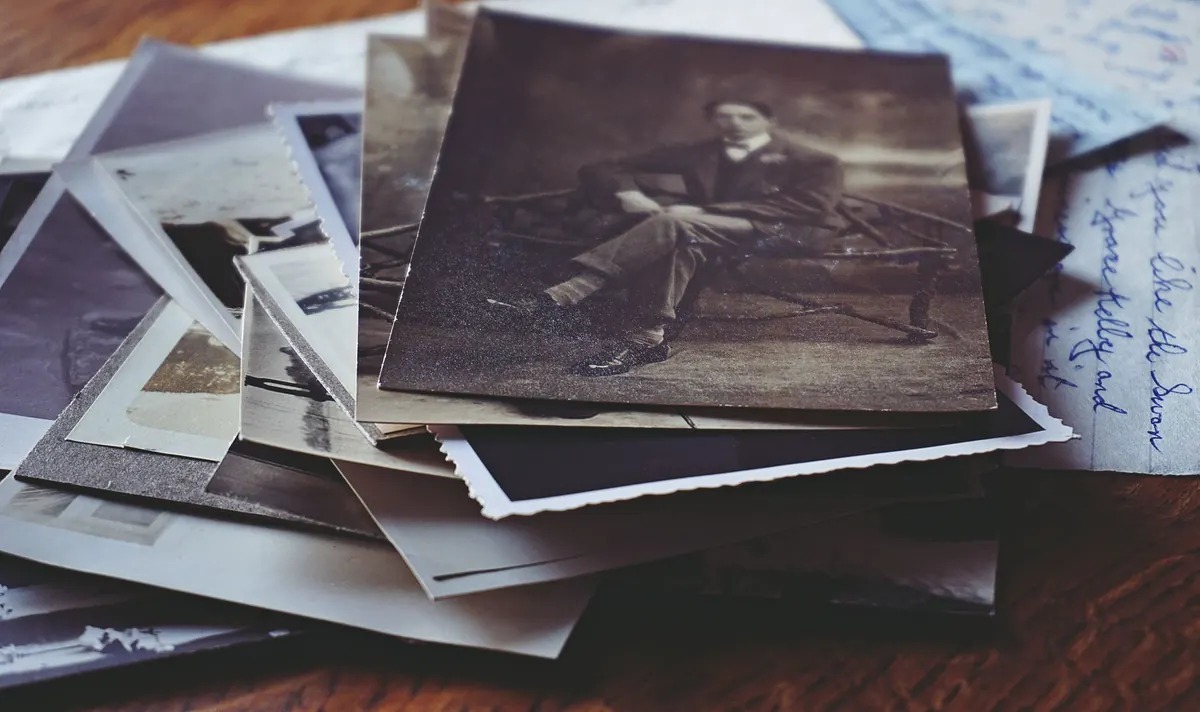
Somerset is generous to family historians. Parish registers survive in unusual completeness, the archive service is well catalogued, and a great deal of it is indexed and searchable from a kitchen table. That generosity carries its own risk. When records arrive easily, errors travel with them just as easily, and a wrong branch grafted on in 2024 can take years to unpick.
The pitfalls below are the ones that come up again and again in Somerset research, along with the practical corrections that the county's archives make possible.
Three John Slades, all baptising children within fifteen miles of each other in the 1780s, is not a hypothetical. It is a Tuesday. The temptation is to pick the one whose dates fit and move on, especially when an online tree has already done the picking for you.
Slow down instead. Keep a separate file for every candidate with the same name, and record what distinguishes them: abode, occupation, the names of witnesses, the bondsman on a marriage allegation, the neighbours buried in adjacent plots. Marriage entries after 1754 are a gift here, because they name the parish of both parties and usually two witnesses, who were often relatives. Two John Slades, one a yeoman of Chedzoy and one a mariner of Bridgwater, are not the same man however neatly their dates line up.
An index is a finding aid, not evidence. Someone typed it, at speed, from handwriting that may have been faded, water-damaged or simply difficult. Place names suffer worst: Stoke St Gregory and Stoke St Mary are easily confused, as are Norton Fitzwarren and Norton St Philip, and a transcriber who has never seen the county can turn a recognisable parish into something that does not exist.
Always try to see the original, whether as a digital image or an ordered copy from the archive. When you look, note down more than the name and date:
Online trees deserve even more caution: most are derivative, copied from one another without citations, and a claim repeated in forty places is still one unverified claim.
Between 1974 and 1996, Bath, Keynsham, Clevedon, Portishead, Nailsea and Weston-super-Mare sat in the county of Avon. Records for those places are now held by different archive services from the rest of Somerset, and a catalogue search in the wrong one will look, falsely, like an absence of evidence. Earlier still, detached portions of parishes were tidied up in the nineteenth century, leaving some families administered by a parish they never lived in.
Place names add to the muddle. "Weston" could be Weston-super-Mare, Weston-in-Gordano or Weston Bampfylde. And if your search engine keeps offering you Somerset, Pennsylvania, or Somerset in Bermuda, it is not being helpful, merely literal.
A Church of England baptism is evidence of a baptism, not of belief. Somerset had long-standing Quaker meetings around Street and Glastonbury, and Baptist, Independent and Methodist chapels in most market towns. Between 1754 and 1837, when only Quakers and Jews were exempt, most nonconformists married in the parish church because the law required it, which is why a parish register can be a perfectly accurate record of a family who worshipped somewhere else entirely.
Look for the chapel's own registers, which may survive at the county archive or at The National Archives, and check burial grounds as well as places of worship. A family can be in the parish register for weddings and in the chapel book for everything else.
Baptisms, marriages and burials are the obvious three, and most researchers stop there. The parish chest, and the archive that inherited it, holds far more: settlement examinations that name a person's birthplace and former employers, removal orders, bastardy bonds, apprenticeship indentures, overseers' accounts, churchwardens' accounts and vestry minutes. Tithe apportionments from the late 1830s and the maps that accompany them will tell you who occupied which field and who owned it, which is a reliable way to distinguish two men of the same name.
Wills proved in the diocese of Bath and Wells, land tax returns, enclosure awards and the surviving estate and solicitors' collections all sit largely offline. None of them is indexed by first name and date, which is precisely why they are underused and why they often solve the problem.
Before 1752 the legal year began on 25 March, so a child baptised in February 1730 may belong to 1731 as we would count it. Registers kept in this style are often written 1730/1, but not always. Older documents may date events by regnal year, and abbreviations for months vary from register to register.
Spelling was phonetic and unstandardised. Search for variants rather than one fixed form, use wildcards where the site allows them, and remember that the same surname can appear three different ways on the same page. Duddridge, Doderidge and Duddrige are one family, not three.
The most useful habit you can build is to treat online indexes as an index and the archive catalogue as the source of truth. Somerset's main holdings are at the Somerset Heritage Centre in Taunton, with Bath Record Office and the services covering North Somerset caring for their own areas. Most of their catalogues are searchable online, even where the documents themselves are not digitised.
Before your next research session, do this:
None of this makes research slower. It makes it stick. A fact with a reference behind it survives every later re-reading of your tree, and in a county with records this good, there is no reason to settle for anything less.
Photo: Suzy Hazelwood / Pexels
A practical guide to the Exmoor places behind R. D. Blackmore's Lorna Doone, from Badgworthy Water to Oare...
A three-hour plan for Wells Cathedral's highlights, from the west front to the chapter house, plus...
A step-by-step walking route through Dunster's castle, Yarn Market, watermill and old streets, with the...